Buying property in Mexico can be exciting, and it is also a transaction that benefits from structure. For buyers from the United States, Canada, and other countries, the difference is not simply finding an appealing home. It is understanding the process, identifying the right professionals, and making each decision with verifiable information.
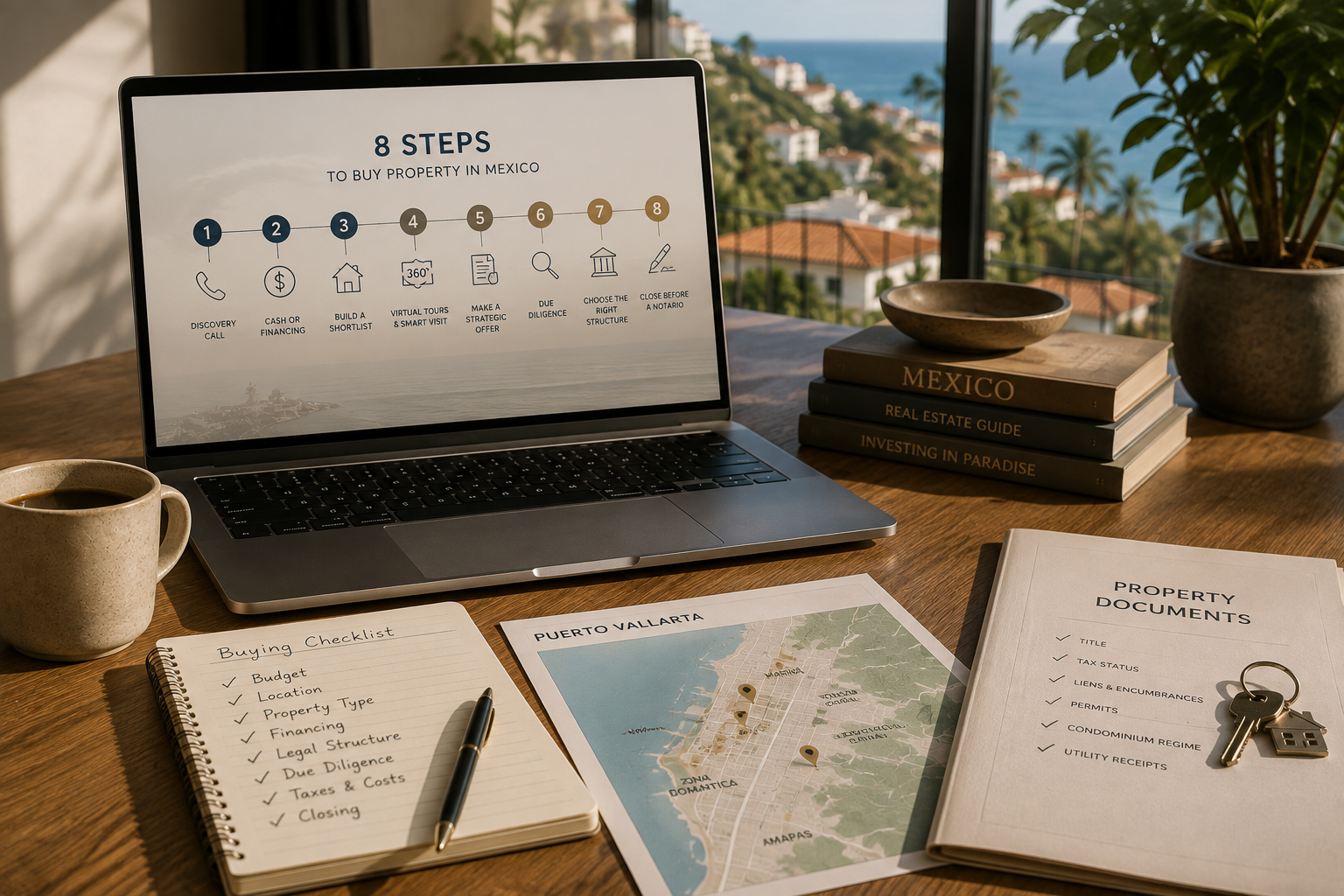
1. Start with a discovery call. Before opening dozens of listings, define the essentials: budget, timeline, purchase purpose, preferred cities, and how you expect to use the property. A second home, retirement home, and investment property have different priorities. This conversation makes it possible to build a realistic search from the start.
2. Decide whether you will buy with cash or financing. Many international buyers purchase with cash, while others explore financing with institutions and lenders familiar with cross-border transactions. The important step is knowing your buying capacity before negotiating and accounting for more than the purchase price: taxes, closing costs, insurance, maintenance, and potential improvements.
3. Build a shortlist, not an endless list. A productive search combines location, property type, lifestyle, budget, and condition. The goal is not to tour everything available, but to identify the homes that genuinely support your plan. Virtual tours, videos, and maps can help eliminate unsuitable options before you travel.
4. Use 360° tours and plan one smart visit. Remote tours let you assess layout, light, views, and finishes before booking a flight. When you decide to visit Mexico, a focused itinerary can include the most promising properties, comparable neighborhoods, and meetings with professionals relevant to your purchase.
5. Make an offer with a strategy. An offer should not be based only on the emotion of a viewing. It helps to review comparable properties, condition, local inventory, seller timing, and contract terms. Sellers often provide the initial contract draft, which is why your representation and legal professionals should review the terms before funds are committed.
6. Coordinate due diligence. Before closing, the relevant elements of the transaction are reviewed: ownership, liens, taxes, permits, condominium regime, developer information when applicable, and the physical condition of the property. The scope varies by property, but the principle remains the same: understand what you are buying before you sign.
7. Choose the appropriate purchase structure. Some homes can be acquired through a direct deed; others, particularly within the restricted zone, require a structure such as a bank trust. The right approach depends on the location, intended use, and characteristics of the transaction. This should be reviewed with the appropriate legal and closing professionals.
8. Close before a notario. A Mexican purchase is formalized before a notario público. This stage coordinates documents, funds, taxes, signatures, and registration. An organized process does not eliminate every question, but it prevents important questions from appearing for the first time on signing day.
Buying in Mexico does not have to feel unfamiliar. With a focused search, well-coordinated due diligence, and representation that communicates in your language, you can move forward clearly from the first conversation through closing.